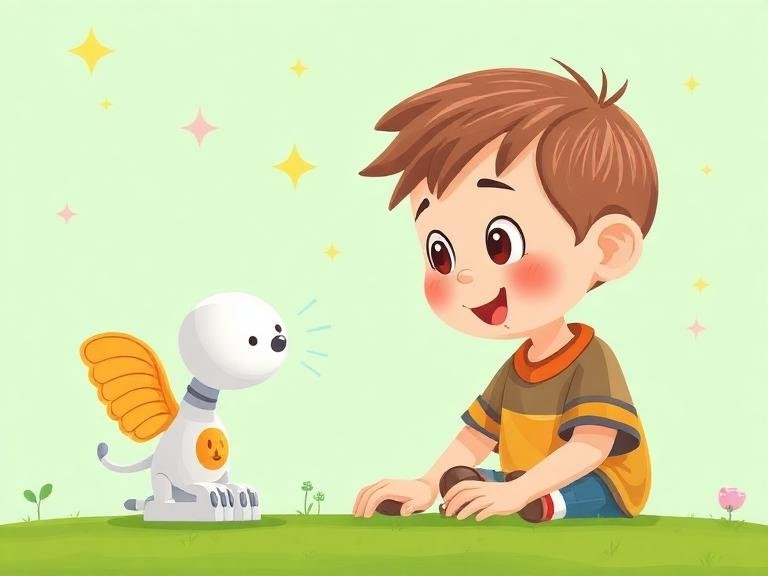
That naturally raises an important question for parents and educators: At what age should kids start learning AI?
The short answer is that there is no single “perfect” age. Children can begin learning about AI concepts from an early age, but the way AI is introduced should change as they grow. For younger children, AI learning should be playful and focused on curiosity. Older children can gradually explore how AI works, how to use it responsibly, and eventually how to build AI-powered projects.
AI4K12, a major initiative focused on K–12 AI education, provides learning guidelines across four age groups: K–2, 3–5, 6–8, and 9–12. Its framework emphasizes concepts such as perception, learning, reasoning, natural interaction, and the social impact of AI.
So rather than asking whether a child is “too young” for AI, it may be more useful to ask: What kind of AI learning is appropriate for their age?
Can Young Children Really Learn About AI?
Yes—but learning about AI doesn’t mean giving a six-year-old a complicated programming course.
For younger children, AI education can start with everyday examples. Parents might explain how a smart speaker recognizes a voice, how a photo app identifies faces, or why a video platform recommends certain videos.
At this stage, the goal is simply to help children understand that computers can perform certain tasks by using data and programmed systems.
AI4K12’s resources include activities designed for elementary-grade students, showing that AI concepts can be introduced through age-appropriate experiments rather than technical lectures.
The important thing is to keep the experience simple, interactive, and fun.
What Age Is Best to Start AI for Kids?
There isn’t a universal starting age, but a practical approach is to think in stages.
Ages 5–7: Introduce AI Through Everyday Life
Children around kindergarten and the early primary-school years don’t need to learn machine-learning algorithms.
Instead, parents can introduce simple questions:
- How does a computer recognize your voice?
- Can a computer tell the difference between a cat and a dog?
- Does a computer always know the correct answer?
- Why does a game make certain suggestions?
- Can a computer make mistakes?
These conversations encourage curiosity and basic digital awareness.
At this age, AI for kids should feel more like discovery than studying.
Parents can use stories, simple games, drawing activities, puzzles, and demonstrations to show children that computers can recognize patterns and respond to information.
Ages 8–10: Start Exploring How AI Works
Around ages 8 to 10, children can begin moving beyond simply using technology to asking how it works.
This is a great age to introduce basic ideas such as:
- Data
- Patterns
- Machine learning
- Computer vision
- Voice recognition
- Chatbots
- Recommendations
- AI mistakes and limitations
Children can experiment with simple AI activities and beginner-friendly coding platforms.
They don’t need advanced mathematics. What matters more is helping them develop a mental model of AI rather than treating it like magic.
For example, if an image-recognition system identifies a picture as a dog, ask the child: “How do you think the computer learned what a dog looks like?”
That simple question can open the door to a much bigger conversation about data and learning.
Ages 11–13: Teach Responsible AI Use
Middle school is an especially important stage for AI education.
Children are increasingly capable of using online tools independently, which means they also need to understand the responsibilities that come with AI.
At this age, AI lessons can include:
- How generative AI works at a basic level
- Why AI can produce incorrect information
- How to check AI-generated answers
- Privacy and personal information
- Copyright and plagiarism
- AI-generated images and misinformation
- Bias in AI systems
- Responsible use of AI for schoolwork
This is also a good time to discuss an important rule: AI should support learning, not replace thinking.
If a student uses AI to complete every homework assignment without understanding the material, they may save time but lose an opportunity to learn.
UNESCO’s AI curriculum research emphasizes age-appropriate learning, critical thinking, and helping learners question the intelligence and trustworthiness of AI applications.
Ages 14–18: Move Toward Deeper AI Skills
Teenagers can gradually explore the technical side of AI.
Depending on their interests, students can learn:
- Python programming
- Data analysis
- Machine learning fundamentals
- Neural networks
- Natural language processing
- Computer vision
- AI ethics
- AI-related careers
- Building simple AI projects
This doesn’t mean every teenager needs to become an AI engineer.
The goal is to give interested students opportunities to move from AI user to AI creator.
Current K–12 AI guidance similarly distinguishes between foundational AI understanding and deeper skills that students can develop during middle and high school.
Why Should Kids Learn AI Early?
Early AI education isn’t just about preparing children for future jobs.
It can also help them become smarter technology users.
1. It Builds Critical Thinking
AI can sound confident even when its answer is wrong. Teaching children to question, verify, and compare information can make them more thoughtful digital citizens.
2. It Encourages Creativity
AI can be used for brainstorming, storytelling, designing, experimenting, and creating projects. With proper guidance, children can explore ideas that might otherwise seem difficult.
3. It Builds Digital Confidence
Understanding the basics of AI helps children feel less intimidated by new technology.
4. It Introduces Future Career Possibilities
AI is influencing fields ranging from medicine and education to business, engineering, entertainment, and science. Early exposure can help children discover interests they may want to pursue later.
5. It Teaches Responsible Technology Use
Perhaps most importantly, children need to understand that powerful technology comes with responsibilities.
The Computer Science Teachers Association and AI4K12 identify areas including humans and AI, machine learning, ethical AI system design, programming, and the societal impact of AI as important areas of K–12 AI learning.
How Parents Can Introduce AI Without Making It Complicated
You don’t need to be an AI expert to help your child learn.
Start with things they already enjoy.
If your child loves drawing, discuss AI-generated images. If they enjoy games, talk about how computer systems can respond to players. If they like asking questions, discuss how AI assistants generate answers.
You can also explore child-friendly educational resources such as KidzoAI to make AI learning more approachable.
Most importantly, learn alongside your child. Saying “I don’t know—let’s find out” can be more valuable than pretending to have every answer.
What Parents Should Avoid
Introducing AI early doesn’t mean giving children unrestricted access to every AI tool.
Parents should consider:
- Age requirements of individual platforms
- Privacy policies
- Whether the tool collects children’s information
- Whether conversations are stored
- Whether content is age-appropriate
- Whether the child understands that AI can make mistakes
- Whether AI use is replacing genuine learning
UNESCO’s work on K–12 AI education also highlights the importance of parental support and developmentally appropriate learning experiences.
The Right Age Depends on the Right Approach
So, at what age should kids start learning AI?
A reasonable answer is as early as the early primary years for basic concepts, provided the learning is age-appropriate. Children around 5–7 can explore simple ideas about smart technology, while ages 8–10 can begin experimenting with how AI recognizes patterns. Around 11–13, children can learn responsible AI use, and teenagers can move into programming, machine learning, ethics, and more advanced projects.
The goal isn’t to turn children into AI experts overnight.
It’s to help them grow up understanding the technology that is becoming part of everyday life.
The best AI education encourages children to stay curious, ask questions, think critically, create things, and understand that technology is a tool—not a replacement for human judgment.
FAQs About AI for Kids
1. What is the best age for a child to start learning AI?
Children can begin exploring simple AI concepts around ages 5–7. At this age, learning should focus on everyday examples, games, stories, and curiosity rather than technical programming.
2. Is AI suitable for young children?
Yes, when it is introduced appropriately. Younger children can learn basic concepts about how computers recognize patterns, understand speech, or make recommendations without using complicated AI tools themselves.
3. Should children learn AI coding?
Older children who show an interest in technology can gradually learn coding and AI concepts. Around middle school and beyond, they may be ready for beginner programming, machine learning activities, and AI projects.
4. Can AI help children with their schoolwork?
AI can be useful for brainstorming, explanations, practice questions, and exploring ideas. However, children should use it as a learning aid rather than simply copying AI-generated answers.
5. What should parents teach children about AI?
Parents should teach children that AI can be helpful but isn’t always correct. Privacy, responsible use, fact-checking, critical thinking, and understanding how AI affects people are just as important as learning how the technology works.
Final Thoughts
There is no magic birthday when a child suddenly becomes “ready” for AI.
Instead, AI learning should grow with the child.
Start with curiosity when they’re young. Introduce concepts and experiments as they become more capable. Teach responsible use as they gain independence. And when they are ready, give them opportunities to build and create.
That’s what meaningful AI for kids education should look like: not rushing children into complicated technology, but giving them the knowledge and confidence to understand the digital world around them.