Ever walked into a room and instantly felt… calmer? Like your shoulders dropped without asking permission? Chances are, nature had something to do with it.
Biophilic design isn’t just another interior trend splashed across social media. It’s a movement — a response to our increasingly digital, indoor, screen-heavy lives. In simple terms, biophilic design is about bringing elements of nature into the spaces where we live, work, and breathe.
And let’s be honest: when was the last time you spent a full day outdoors without checking your phone?
What Does “Biophilic” Mean?
“Biophilia” literally means “love of life.” The term was popularized by biologist Edward O. Wilson, who suggested that humans have an innate tendency to seek connections with nature. Not a preference. Not a hobby. A deep-rooted need.
Think about it. Why do we crave weekend getaways? Why do we feel refreshed after a walk in the park? Why do mountain wallpapers and ocean screensavers dominate our devices?
Because nature feels like home — even when we’re indoors.
Why Nature Matters More Than Ever
Modern life has quietly pushed us inside. Offices. Apartments. Cars. Malls. Screens everywhere. Meanwhile, stress, anxiety, and burnout are rising faster than rent prices.
Biophilic design steps in like a breath of fresh air — sometimes literally. It reconnects us with natural rhythms, textures, and light patterns our brains evolved to respond to.
Nature isn’t a luxury. It’s a biological requirement.
The Psychology Behind Biophilic Design
Let’s dive deeper. Why does a simple houseplant make a room feel alive? Why does sunlight change your mood?
Humans’ Innate Connection to Nature
For thousands of years, humans lived outdoors. Forests, rivers, open skies. Our nervous systems developed in environments filled with natural stimuli — rustling leaves, flowing water, shifting daylight.
Fast forward to today: fluorescent lighting, concrete walls, artificial climate control.
Our brains? Still wired for nature.
Biophilic design works because it aligns modern spaces with ancient biology. It’s like giving your mind familiar food after years of processed noise.
How Natural Elements Affect Mood and Stress
Studies consistently show that exposure to natural elements can:
- Lower cortisol (the stress hormone)
- Improve focus
- Reduce anxiety
- Enhance overall well-being
Sunlight regulates circadian rhythms. Plants improve air quality. Natural textures create sensory comfort.
It’s not magic. It’s neuroscience.
Core Principles of Biophilic Design
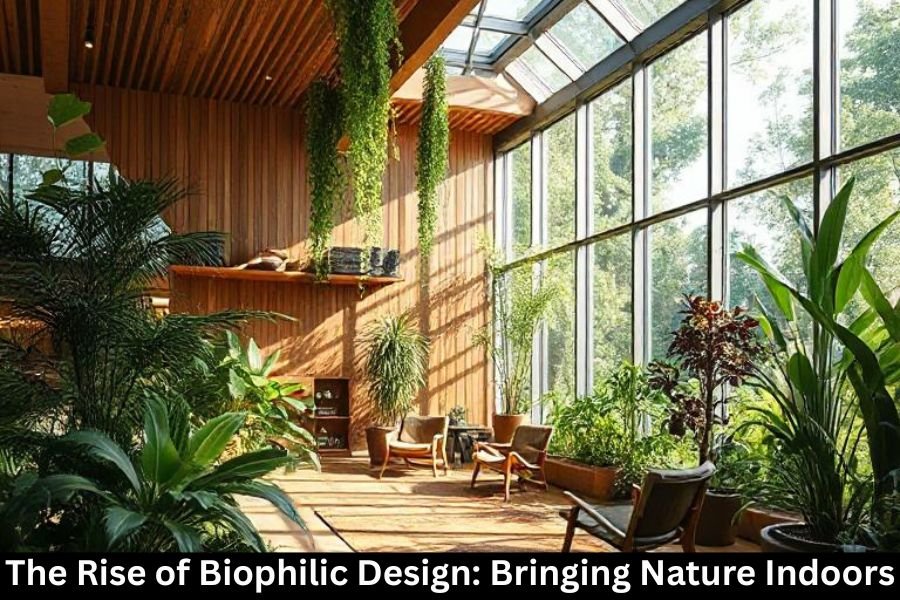
Biophilic design isn’t just “add plants and call it a day.” It’s about thoughtfully integrating nature through multiple channels.
Natural Light
Light is everything.
Natural daylight boosts mood, improves sleep, and increases productivity. Compare working under warm sunlight versus harsh artificial bulbs — the difference is night and day (pun intended).
Ways to maximize light:
- Use sheer curtains
- Position mirrors strategically
- Keep windows unobstructed
Your brain loves daylight more than your electricity bill does.
Indoor Plants and Greenery
Plants are the rockstars of biophilic design.
They purify air, soften spaces, and introduce organic shapes. Even a single plant can transform a sterile room into something inviting.
Beginner-friendly options:
- Snake plant
- Pothos
- Peace lily
- ZZ plant
No green thumb? Start small. Plants are forgiving roommates.
Natural Materials and Textures
Wood. Stone. Bamboo. Linen. Clay.
Natural materials ground a space. They add warmth and authenticity that plastic simply can’t replicate. Your senses notice the difference, even if you don’t consciously think about it.
Views of Nature
If you’ve got a window with a view — use it.
A glimpse of trees, sky, or water can significantly reduce mental fatigue. No scenic outlook? Nature-inspired artwork or murals can help bridge the gap.
Real vs. Simulated Nature
Real nature is ideal. But simulated elements still offer benefits.
Examples:
- Nature photography
- Botanical prints
- Water feature sounds
- Organic patterns
Your brain responds to cues. Even illusions matter.
Key Benefits of Biophilic Spaces
Why are designers, architects, and wellness experts obsessed with this approach?
Because it works.
Improved Mental Well-being
Biophilic spaces reduce stress and enhance emotional balance. They feel less like boxes and more like environments.
Imagine your home not just as shelter, but as a sanctuary.
Enhanced Productivity and Creativity
Nature stimulates the mind.
Offices with natural light and greenery report:
- Higher employee satisfaction
- Better focus
- Increased creativity
Turns out, inspiration doesn’t thrive under flickering fluorescent lights.
Better Physical Health
Benefits include:
- Improved air quality
- Better sleep cycles
- Reduced headaches
- Lower blood pressure
Your body relaxes when your environment stops fighting it.
Biophilic Design in Homes
Let’s make this practical.
Living Rooms
Your main relaxation zone deserves natural energy.
Ideas:
- Add layered plants
- Use wooden furniture
- Incorporate earthy tones
- Let sunlight flow freely
Think cozy forest, not jungle chaos.
Bedrooms
Sleep and nature are best friends.
Enhancements:
- Soft natural fabrics
- Calming greens and neutrals
- Minimal clutter
- Gentle lighting
Your bedroom should whisper “rest,” not scream “notifications.”
Kitchens and Dining Areas
Even functional spaces benefit.
Try:
- Herb gardens
- Natural stone countertops
- Wooden accents
- Fresh airflow
Cooking surrounded by life just feels… better.
Biophilic Design in Workplaces
Where burnout often lives.
Reducing Burnout
Nature reduces cognitive overload. Employees feel less drained in spaces that include daylight, greenery, and natural textures.
Less stress → better performance → happier humans.
Boosting Employee Engagement
A thoughtfully designed workspace signals care. People feel valued when their environment supports well-being.
Design influences culture more than mission statements ever could.
Biophilic Design in Urban Environments
City life doesn’t have to mean nature deprivation.
Small Spaces, Big Impact
Tiny apartment? No problem.
Use:
- Vertical gardens
- Hanging plants
- Multi-functional furniture
- Bright color palettes
Nature scales beautifully.
Apartments and Condos
Balconies become mini-oases. Window sills transform into green corners. Even bathrooms can host humidity-loving plants.
Urban living can still feel organic.
Practical Ways to Add Biophilic Design
No renovation required.
Budget-Friendly Ideas
- Rearrange furniture to capture light
- Add a few plants
- Swap synthetic décor for natural textures
- Use nature-inspired colors
Small changes, big mood shifts.
DIY Biophilic Upgrades
- Build a plant shelf
- Create a moss wall
- Add a tabletop fountain
- Repurpose wooden elements
Creativity meets calm.
Common Mistakes to Avoid
Yes, there are pitfalls.
Overcrowding with Plants
More isn’t always better. Too many plants can feel cluttered and overwhelming.
Balance is key.
Ignoring Functionality
A beautiful space that doesn’t function? Frustration waiting to happen.
Biophilic design should enhance life, not complicate it.
The Future of Biophilic Design
This movement is only growing.
Sustainability and Eco-Conscious Living
Biophilic design naturally aligns with sustainability — energy efficiency, natural materials, healthier living environments.
Good for you. Good for the planet.
Technology Meets Nature
Smart lighting mimicking daylight cycles. Digital skylights. AI-controlled indoor gardens.
The future blends innovation with instinct.
Conclusion
Biophilic design isn’t about decorating with plants. It’s about redesigning how spaces make us feel.
Because at the end of the day, your environment shapes your energy, your mood, your creativity, your rest.
Nature isn’t something we visit. It’s something we belong to.
So why not invite it back inside?
FAQs
1. What is biophilic design in simple terms?
Biophilic design is an approach to creating spaces that incorporate natural elements like light, plants, materials, and textures to improve well-being.
2. Do I need a large space for biophilic design?
Not at all. Even small apartments can benefit from plants, natural light, and organic materials.
3. Are artificial plants effective?
Real plants offer more benefits, but high-quality artificial greenery can still create visual and psychological comfort.
4. Is biophilic design expensive?
It can be, but many budget-friendly changes — like adding plants or maximizing sunlight — are affordable.
5. Does biophilic design really improve mental health?
Research strongly suggests that nature-integrated spaces reduce stress, improve mood, and enhance cognitive function.