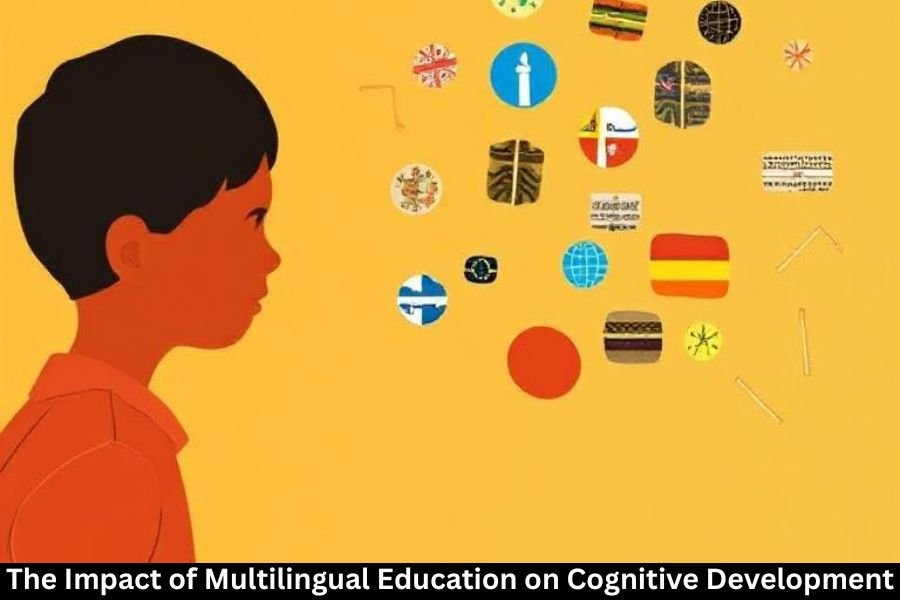
Let’s start with a simple question: have you ever noticed how some people seem mentally quicker, more adaptable, or surprisingly good at juggling tasks? Now here’s another question — what if language learning plays a bigger role in that than we think?
Multilingual education isn’t just about speaking more than one language. It’s about shaping the brain in ways that influence memory, attention, creativity, and even long-term cognitive health. In a world where globalization connects classrooms, workplaces, and cultures, multilingual learning is no longer a luxury — it’s becoming a necessity.
But what exactly happens inside the brain when someone learns multiple languages? And does multilingual education really boost cognitive development, or is it just another educational buzzword?
Let’s unpack it together.
Understanding Multilingual Education
What Is Multilingual Education?
Multilingual education refers to teaching academic content in two or more languages. It’s not simply a language class — it’s a structured approach where students use multiple languages to learn subjects like math, science, or history.
Think of it as training your brain with multiple operating systems instead of just one.
Students may:
- Learn subjects in different languages
- Develop literacy across languages
- Switch between languages depending on context
This constant mental navigation is where the cognitive magic begins.
Common Models of Multilingual Learning
Immersion Programs
In immersion programs, students learn primarily through a second language. Imagine stepping into a classroom where everything — instructions, discussions, assignments — happens in another language.
Challenging? Yes. Powerful for brain development? Absolutely.
Dual-Language Programs
Here, students learn using two languages equally. The goal is bilingual proficiency and academic excellence.
It’s like building two strong mental highways instead of one crowded road.
Transitional Bilingual Education
This model starts with a student’s native language and gradually transitions to another language. It supports comprehension while encouraging new language acquisition.
Cognitive Development Explained
Before we go deeper, let’s clarify what “cognitive development” actually means.
Cognitive development involves how we:
- Think
- Learn
- Remember
- Solve problems
- Pay attention
Language is deeply tied to all of these.
Key Cognitive Skills Affected by Language
Memory
Learning multiple languages strengthens working memory. Why? Because the brain constantly stores, retrieves, and organizes vocabulary, grammar, and meanings.
It’s mental weightlifting.
Attention Control
Multilingual individuals regularly filter out one language while using another. This strengthens selective attention — the ability to focus despite distractions.
Like tuning into one radio station while ignoring others.
Problem-Solving
Switching languages enhances mental flexibility. Multilingual learners often approach problems from multiple perspectives.
Different language, different lens.
How Learning Multiple Languages Shapes the Brain
Brain Plasticity and Language Acquisition
The brain is not static. It rewires itself based on experiences — a concept known as neuroplasticity.
Multilingual learning:
- Creates new neural connections
- Strengthens existing pathways
- Improves adaptability
It’s like upgrading your brain’s internal wiring.
Executive Function Enhancement
Executive functions control:
- Decision-making
- Planning
- Emotional regulation
- Task switching
Multilingual education constantly exercises these skills. Every time a learner chooses which language to use, the brain engages executive control systems.
Mental multitasking at its finest.
Neural Flexibility
Studies show multilingual individuals often display increased gray matter density in areas related to language and cognitive control.
In simpler terms? Their brains become more agile.
Benefits of Multilingual Education
Improved Academic Performance
Contrary to old myths, multilingual students often outperform monolingual peers in:
- Reading comprehension
- Analytical thinking
- Abstract reasoning
Why? Because their brains are trained to process information more efficiently.
Better Multitasking Abilities
Switching between languages sharpens task-switching skills.
Imagine your brain smoothly shifting gears instead of grinding.
Enhanced Creativity
Multilingual learners tend to show:
- Greater divergent thinking
- Better idea generation
- More innovative problem-solving
Different languages encourage different patterns of thought.
Delayed Cognitive Decline
Here’s a fascinating benefit: multilingualism is associated with delayed onset of age-related cognitive decline.
It’s like building a cognitive reserve — a mental savings account for later years.
Social and Emotional Cognitive Gains
Empathy and Perspective-Taking
Language isn’t just communication — it’s culture, emotion, worldview.
Multilingual learners often develop:
- Better emotional understanding
- Greater empathy
- Enhanced social awareness
Because each language carries unique social cues.
Cultural Intelligence
Exposure to multiple languages naturally exposes learners to multiple cultures.
This strengthens:
- Adaptability
- Cross-cultural communication
- Global awareness
Essential skills in today’s interconnected world.
Challenges and Misconceptions
“Does Multilingualism Confuse Children?”
Short answer? No.
Children may mix languages temporarily, but this is a normal part of development — not confusion.
Their brains are learning to manage multiple systems simultaneously.
Learning Difficulties vs Learning Differences
Sometimes multilingual learners are mistakenly perceived as struggling academically.
But often, it’s not a deficit — it’s an adjustment period while the brain builds linguistic proficiency.
Different timeline, not lesser ability.
The Role of Age in Multilingual Cognitive Development
Early Childhood Advantages
Young brains are especially receptive to language learning.
Benefits include:
- Native-like pronunciation
- Stronger neural adaptation
- Faster acquisition
It’s like wet cement — easier to shape.
Adult Language Learning
Adults may learn slower, but they gain:
- Enhanced memory
- Improved focus
- Better cognitive resilience
It’s never “too late” for brain benefits.
Practical Strategies for Effective Multilingual Education
Balanced Exposure
Consistency matters more than intensity.
Regular interaction with each language strengthens retention.
Consistent Reinforcement
Practice through:
- Reading
- Conversation
- Media
- Writing
Use it or lose it.
Supportive Learning Environments
Encouragement is key. Anxiety blocks learning; confidence accelerates it.
A safe environment fuels cognitive growth.
Future Implications of Multilingual Learning
Workplace Advantages
Multilingual individuals often excel in:
- Communication-heavy roles
- International business
- Problem-solving positions
Because cognitive flexibility translates into professional adaptability.
Global Citizenship
Language learning builds bridges.
It prepares learners to:
- Navigate diverse cultures
- Collaborate internationally
- Think beyond borders
Conclusion
Multilingual education is far more than learning vocabulary or grammar rules. It’s a powerful form of cognitive training that shapes how the brain processes information, solves problems, manages attention, and even ages.
From sharper memory to enhanced creativity, from emotional intelligence to long-term brain health — the benefits ripple through nearly every aspect of mental functioning.
So the next time someone asks, “Is learning multiple languages worth it?”
The better question might be, “Can we afford not to?”
FAQs
1. Does multilingual education make children smarter?
It doesn’t magically increase IQ, but it strengthens cognitive skills like memory, attention control, and problem-solving — which often translate into better academic performance.
2. Can learning multiple languages delay dementia?
Research suggests multilingualism may delay the onset of symptoms by building cognitive reserve, though it’s not a guaranteed prevention method.
3. Is it harder for multilingual students to learn in school?
Initially, there may be adjustment challenges, but long-term outcomes often show equal or improved academic success.
4. What is the best age to start multilingual education?
Early childhood offers the greatest neurological advantages, but cognitive benefits occur at any age.
5. Can adults still gain brain benefits from language learning?
Absolutely. Adults often experience improvements in memory, focus, and mental flexibility.